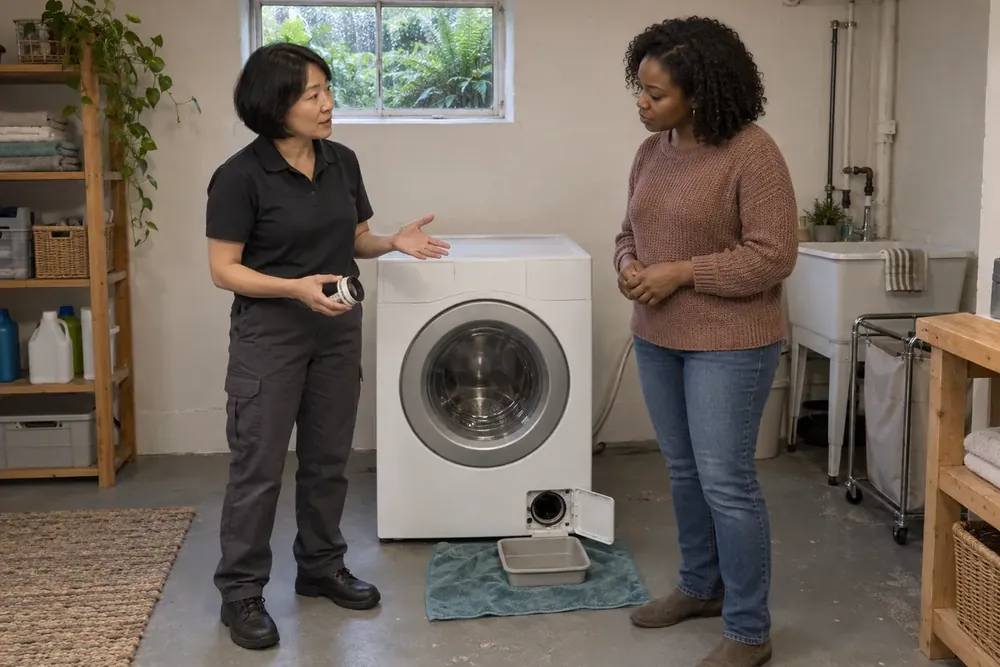
From the First Call Through the Operating Check
| Step | What happens |
|---|---|
| Explain the problem | Describe the appliance's behavior |
| Connect for repair | Discuss the service request |
| Review the findings | Decide on the proposed work |
| Repair and test | Check the affected function |
Say What the Appliance Is Doing
Your description starts the repair request, even when you do not know the cause. A refrigerator that runs continuously, a dishwasher with water left in the tub and a washer that stops at the spin cycle each give a useful starting point. Say which appliance is affected, your town and what changed when the trouble began.
The brand and model help when they are handy, but you can call without finding them. If a display shows a code, read the characters exactly during the conversation. The same code can mean different things across models, so avoid treating an online interpretation as a diagnosis. Describe sounds and visible leaks without pulling the appliance out or opening covers.
Get Connected for the Service Request
The call connects you with one of our local appliance repair partners to move the request forward. Explain whether the appliance is freestanding, built into cabinetry or part of a stacked laundry arrangement. Details about stairs, a tight doorway or an upstairs laundry room help describe access without requiring you to measure or rearrange anything.
Mention whether a cooking appliance or dryer uses gas or electricity when you know. There is no need to inspect connections to answer. You can also describe an earlier repair or a problem that returns only during certain cycles. Keep the account practical: what you selected, what the appliance did and where it stopped.
Understand the Cause and Proposed Work
Your technician examines the appliance and tests the function involved in the complaint. A machine that fails to start needs a different assessment from one that starts and stops halfway through. Testing helps separate the original fault from a related symptom, such as poor drying after a washer leaves clothes unusually wet.
The findings lead to an explanation of the cause, the proposed repair and the price for your approval. Your technician discusses those details before repair work begins. If replacement deserves consideration, compare the appliance's overall condition, the required part and the work involved. A symptom alone does not establish that an entire appliance needs replacing.
Finish the Repair and Check Operation
The agreed repair is followed by an operating check of the affected function. Your technician checks whether the appliance fills, drains, heats or cools as appropriate to the work. When a needed part must be ordered, the repair continues on a return visit; ask how the appliance should be left in the meantime.
While waiting, stop using a leaking or malfunctioning machine and switch it off at its controls when safe. An easily reached plug can be unplugged safely without moving the appliance. Keep a warming refrigerator closed. If gas is suspected, leave right away even if the smell seems mild, without using a phone or operating electrical switches or devices that could cause a spark, as NW Natural advises; stay a safe distance away, then call 911 and NW Natural's 24-hour emergency line, and address appliance repair after the safety issue.