
Signs Worth a Call
- New leaks, grinding noises, repeated stops and lost heating or cooling are appliance warning signs that deserve attention.
- Stop using an appliance that sparks, smells burnt or leaks; leave immediately for a suspected gas leak and call from outside.
- Call with the symptoms you already know; tables and display codes cannot establish which part has failed.
Common Symptoms Across Kitchen and Laundry Appliances
Refrigerator Changes That Need Attention
| Sign | Likely cause | What to do |
|---|---|---|
| Food compartment feels warm | Airflow or cooling fault | Keep the doors shut |
| Frost along rear wall | Air leak or defrost fault | Call about the frost |
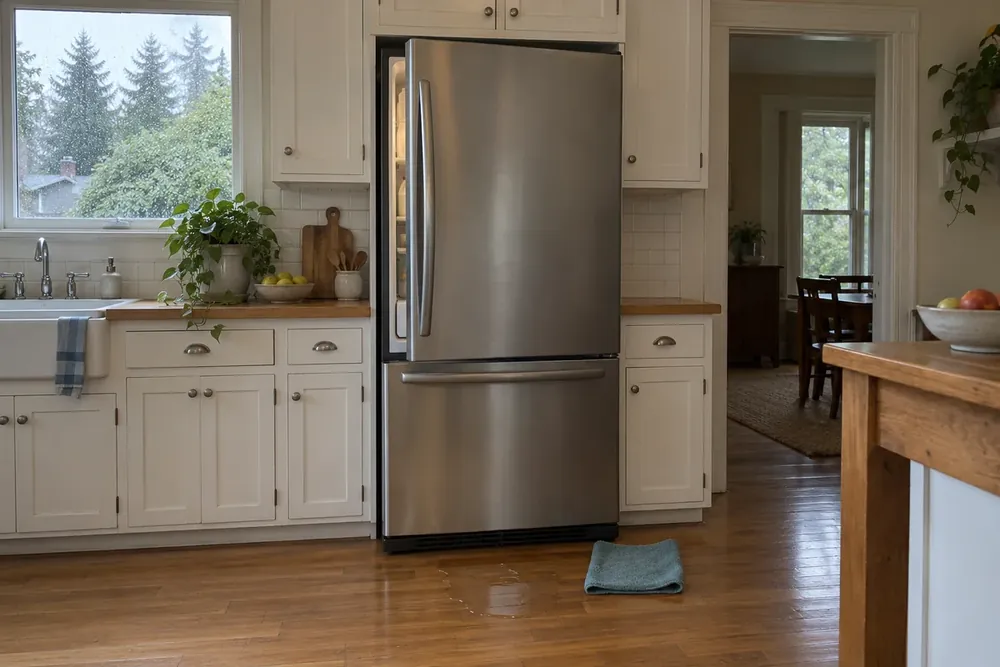
| Water below the cabinet | Drain or water-system leak | Call about the leak |
| New clicking or grinding | Starting or fan fault | Call about the noise |
Possible reasons for a refrigerator not cooling include poor door sealing and restricted airflow, both identified in GE Appliances' cooling guidance. A click alone does not establish compressor failure, so describe whether the sound happens repeatedly or accompanies a temperature change. None of these observations or checks is required before calling.
Freezer and Ice Maker Changes
| Sign | Likely cause | What to do |
|---|---|---|
| Frozen food starts softening | Cooling or seal fault | Keep the lid closed |
| Heavy frost near seal | Warm air entering | Call about frost buildup |
| Ice production stops | Fill or temperature fault | Call about lost production |
| Water beside ice maker | Fill-system or seal leak | Stop use and call |
A warming freezer and an ice maker that stops producing need different checks because ice production also depends on filling and temperature. Share whether the freezer still feels cold and whether ice production stopped suddenly, without removing the bin or running test cycles. Leave frost and any suspected damage untouched while your technician assesses the cause.
Washer Leaks, Stops and Shaking
| Sign | Likely cause | What to do |
|---|---|---|
| Water across the floor | Seal, pump or hose leak | Stop use and call |
| Water remains after cycle | Drain restriction or pump fault | Stop use and call |
| Violent movement during spin | Load or suspension problem | Stop at the controls |
| Cycle stops with code | Model-specific fault indication | Read code during call |
For anyone wondering who to call for a leaking washing machine, an appliance repair technician assesses leaks associated with the machine. Call and describe whether water appears during filling, washing or draining; do not run another load to recreate the leak. Read an exact display code during the conversation rather than using the code to choose a replacement part.
Dryer Heat, Noise and Cycle Changes
| Sign | Likely cause | What to do |
|---|---|---|
| Clothes need repeated cycles | Airflow or heating problem | Stop use and call |
| Drum turns without heat | Heating or control fault | Call about lost heat |
| Scraping while drum rotates | Worn drum support parts | Stop at the controls |
| Burning smell during use | Overheating or lint buildup | Stop use and call |
Repeated long drying cycles, scraping and burning smells need attention rather than another attempt at drying the same load. For routine care, the U.S. Fire Administration recommends cleaning the lint filter before using the dryer. A clean screen does not rule out other airflow or heating faults, and cleaning is never a condition for placing the call.
Dishwasher Cleaning and Drainage Changes
| Sign | Likely cause | What to do |
|---|---|---|
| Dirty dishes after washing | Filter, spray or circulation issue | Call about wash results |
| Standing water after cycle | Drain restriction or pump fault | Stop use and call |
| Water escaping at door | Seal, spray or suds issue | Stop at the controls |
| Cycle repeatedly stops | Latch or control fault | Call about cycle stops |
Poor wash results and water left after a cycle can involve different parts, so neither symptom identifies the pump by itself. Describe whether the dishwasher fills, sprays or stops midway, using only what you have already noticed. Leave a leaking machine off rather than running an empty cycle to test it.
Oven and Range Heating Changes
| Sign | Likely cause | What to do |
|---|---|---|
| Food consistently cooks unevenly | Sensor, element or seal fault | Call about uneven heating |
| Oven stays cold | Heating or control fault | Stop at the controls |
| Burner will not ignite | Ignition-system fault | Stop at the controls |
| Rotten-egg gas odor | Possible natural gas leak | Leave; call utility from outside |
Uneven cooking, lost heat and ignition trouble need diagnosis rather than repeated attempts to start the appliance. If you smell gas, do not touch switches or appliance controls; leave immediately and call the gas utility or 911 from outside, following NW Natural's gas-leak precautions. Arrange appliance repair after the immediate hazard has been addressed.
Microwave Noise, Sparks and Door Trouble
| Sign | Likely cause | What to do |
|---|---|---|
| Runs without warming food | Heating-system fault | Stop use and call |
| Sparks inside cooking cavity | Contamination or internal damage | Stop at the controls |
| Door will not close | Latch or hinge damage | Stop using the microwave |
| New loud buzzing | Fan or heating-component fault | Stop use and call |
Sparks, a damaged door or a sudden loud buzz are reasons to stop using the microwave and describe the symptoms on the call. Keep the case closed because a shock hazard remains possible after unplugging. Internal diagnosis belongs with your technician, even when the display still works.