
Keep It or Replace It
- Repairing a refrigerator often makes sense when the fault is limited to a replaceable fan, gasket or fill valve and the cabinet remains sound.
- Replacing an older refrigerator may be more practical when its sealed system fails or essential replacement parts are discontinued.
- Ask your technician to identify the fault and compare the repair scope with the condition of the rest of the appliance.
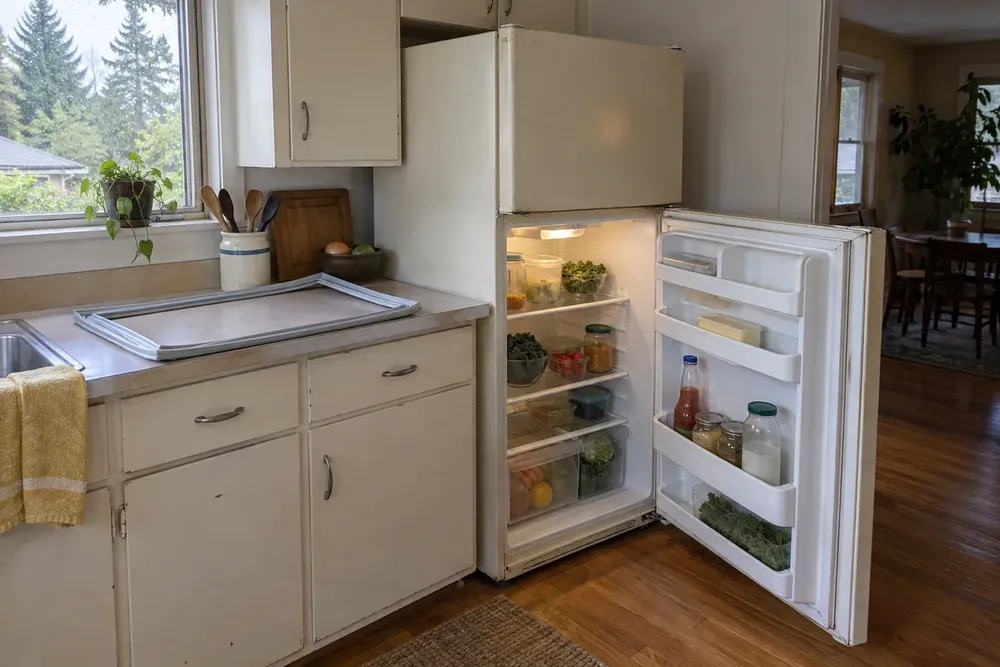
Compare the Fault With the Appliance's Overall Condition
| Appliance | Usually worth repairing when | Usually time to replace when |
|---|---|---|
| Refrigerator or freezer | One fan or seal has failed | Old sealed system has failed |
| Washing machine | Pump or fill valve is replaceable | Washer tub is cracked |
| Clothes dryer | Belt or door switch has failed | Drum has rusted through |
| Dishwasher | Replaceable pump is the main fault | Essential control board is discontinued |
An isolated, replaceable fault generally favors repair, while major damage or an unavailable essential part can favor replacement. Decide whether to repair or replace a refrigerator after the failed component is identified. Age matters, but a sound cabinet and an obtainable fan or gasket can keep an older machine useful. A failed sealed system on an old refrigerator deserves a closer comparison with replacement.
To repair or replace a washing machine, weigh the damaged part against the tub and the machine's other functions. A pump or fill valve may be a contained repair; a cracked tub changes the decision. The question of whether to repair or replace a washer also depends on repeated faults, not just the newest symptom. For a dishwasher, repair or replace decisions should account for washing performance, leaks and continued parts production.
Cooking Appliances and Ice Makers
| Appliance | Repair often makes sense | Replacement deserves consideration |
|---|---|---|
| Oven or stove | An igniter or switch is replaceable | Essential board is no longer made |
| Microwave oven | One door switch has failed | Several major components have failed |
| Ice maker | A fill valve is the fault | Essential assembly is unavailable |
Cooking appliances and ice makers can often be repaired when the problem is confined to an obtainable component. A replacement igniter may restore an otherwise sound oven. A microwave door-switch fault needs professional diagnosis; keep the case closed and have your technician assess the appliance's condition and installation.
An ice maker with a fill-valve problem is different from one affected by a larger refrigerator cooling fault. Describe both ice production and cooling during the call. For built-in cooking units, compare the repair with the effort needed to find a replacement that fits the existing space.
Age, Energy Use and Replacement Fit
| Factor | Useful comparison |
|---|---|
| Overall condition | One failure versus repeated faults |
| Parts availability | Correct part still being produced |
| Energy use | Comparable models and usage information |
| Appliance dimensions | Space, door clearance and capacity |
Age, energy use and fit help refine the decision once the fault is known. Avoid treating a birthday as an automatic replacement deadline. Consider the cabinet, tub or drum, earlier repairs and whether essential parts remain obtainable. One of our local appliance repair partners will explain the repair scope and price so you can compare the options before authorizing work.
For a refrigerator, repair vs. replace comparisons should include energy use without assuming a particular saving. Compare model-specific energy information and equivalent capacity. With a dryer, repair vs. replace considerations also include gas or electric operation and fit within a laundry stack. Decide whether to repair or replace a dryer based on the diagnosed fault, drum condition and the practical demands of a replacement.
Safe Steps While You Decide
| Problem | Safe action |
|---|---|
| Refrigerator getting warm | Keep the doors shut |
| Dryer making grinding noises | Stop using the dryer |
| Washer leaking during operation | Switch it off at its controls |
| Microwave door visibly damaged | Stop using the microwave |
Stop using an appliance that is leaking, grinding or visibly damaged, and call about the problem. Keeping the doors shut on a warm refrigerator or freezer limits repeated warm-air entry. Share an accessible model label or exact display code during the conversation; neither is a prerequisite for calling.
Your technician can distinguish the current fault from wider wear. A replacement decision should also account for delivery access, fit and the handling of the old unit. The appliance repair cost page explains how parts and access affect repair work.
Disposal and Recycling After Replacement
| Appliance type | Disposal consideration |
|---|---|
| Refrigerator or freezer | Refrigerant needs special handling |
| Metal laundry appliance | Arrange suitable recycling or disposal |
| Built-in kitchen unit | Plan removal and transport |
Replacing an appliance includes arranging an appropriate destination for the old unit. Around Portland, Metro Central and Metro South accept listed household appliances, including refrigerators, freezers, washers and dryers. Metro's Find a recycler tool supplies item-specific disposal instructions and drop-off options.
For Vancouver-area disposal planning, Clark County's self-haul page lists transfer-station resources and a recycling directory, and notes that accepted items vary by location. Confirm the destination's requirements when arranging disposal, after discussing the appliance fault on the repair call.
Under U.S. EPA safe disposal requirements, the final disposer must ensure refrigerant is recovered from refrigerators and freezers before final disposal. Leave refrigerant handling to the professionals carrying out recovery; keep the cooling system closed.